Enhancing the Musical Experience

Focus of the Speaker
Our prototype idea is a wireless bluetooth speaker that engages the 4 senses of touch, sight, motion and hearing.
Our goal is to enhance the musical experiences of users with hearing and visual related disabilities.
Senses Engaged
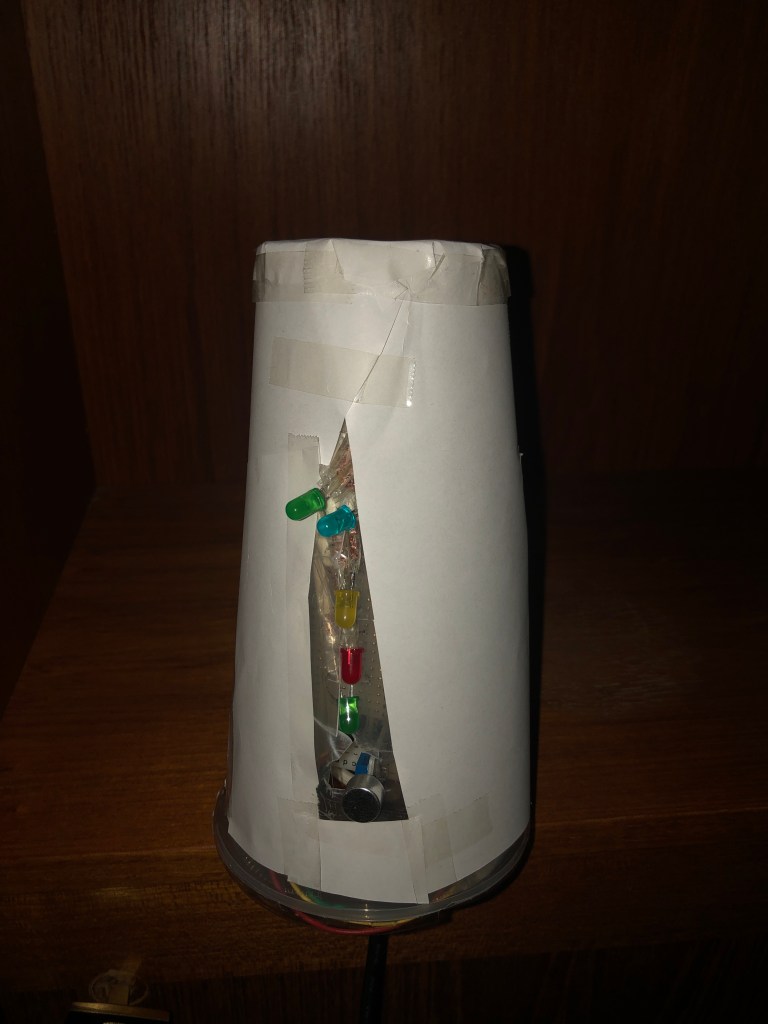
For sight, we use the implementation of LED lights that light up to the song’s music beat and illuminate our user’s experience’s visually.
For motion we plan to incorporate motion sensors that can react to gestures done close to the speaker that can increase or decrease the music’s volume.
And for hearing, we have the speaker of course playing different sounds according to the music users choose to play.
Objectives
Longevity
For our current prototype, we used reusable materials like paper, the plastic cup and Arduino that may be unassembled to use for other projects. As for future iterations, we plan to aim for heightened sustainability by using biodegradable materials like bamboo or bioplastics.
Accesibility
We want to ensure accessible use for our visually and hearing impaired users while catering towards other considerations that these user groups may face such as sensitivity to light.
Functionality
We want to ensure that the design for each feature and its somatic senses, operate efficiently and how we planned for it to work in order to improve our user’s musical experiences.
Creation
Materials for Prototype
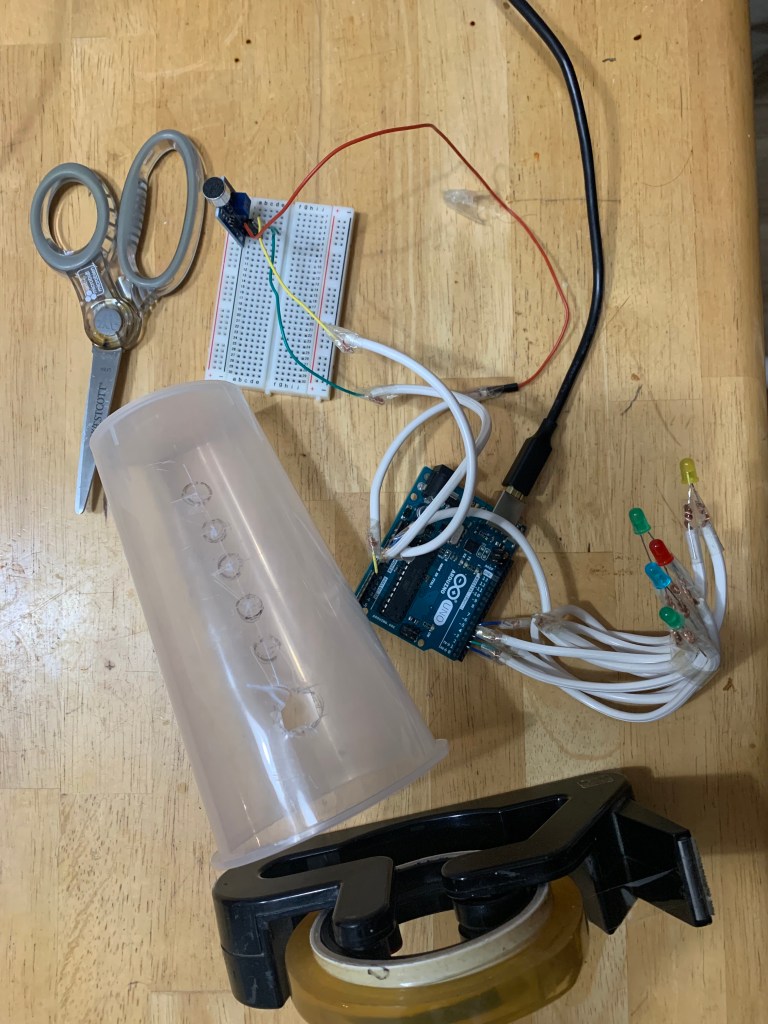
We are repurposing materials we already have to make our prototype. Our materials are divided into three categories: Construction, Electronics and Decorations.
The materials we used for construction include: A recycled water bottle for shaping, scissors for in incisions or small cuts, tape for holding pieces together.
For the working light and sound sensor electronics we used: The Ardunio UNO, a Breadboard, 5 individual LEDs, a sound intensity sensor, and wires.
And for the decoration aspect we used paper and tape for covering the cup and holding it together.
Producing our Prototype
We produced our prototype by using a plastic cup as the structure and the base for the speaker, and created outlines for where our LEDs and sensor would fit, using a pen.
We then coded the LED lights and sensor using the Arduino UNO.
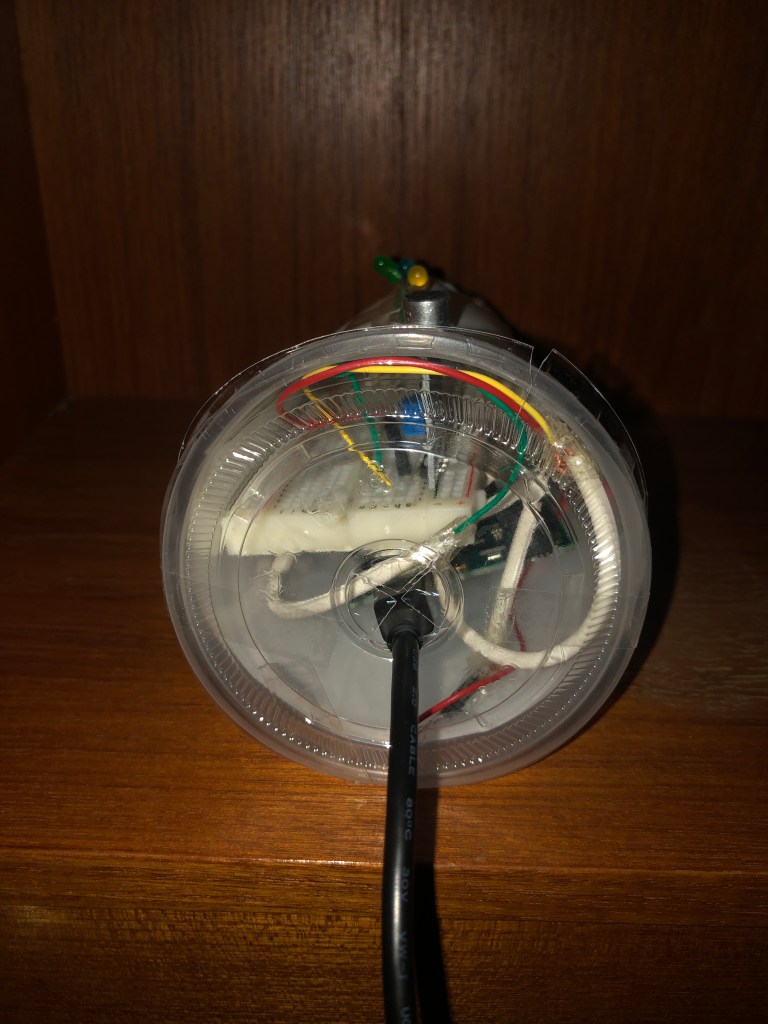
We placed all the electrical components inside the cup and poked the LEDs and sensor through their holes, and closed the cup with its lid and taped paper around the structure to ensure the Arduino and wires were covered from the outside.
Final Product

Challenges
We experienced a few minor technical challenges when developing our prototype. We would’ve created an even better prototype if we didn’t limit ourselves on our time.
We would’ve liked to have put more thought into fully developing more ideas and incorporating them differently.
Reactions
Our audience was well receptive of our speaker. We had no real feedback for
My group and I are proud of the box we created.
 Megan McMullen
Leave a comment