Timeline: Jan-Apr 2023
Role: Designer
The Challenge
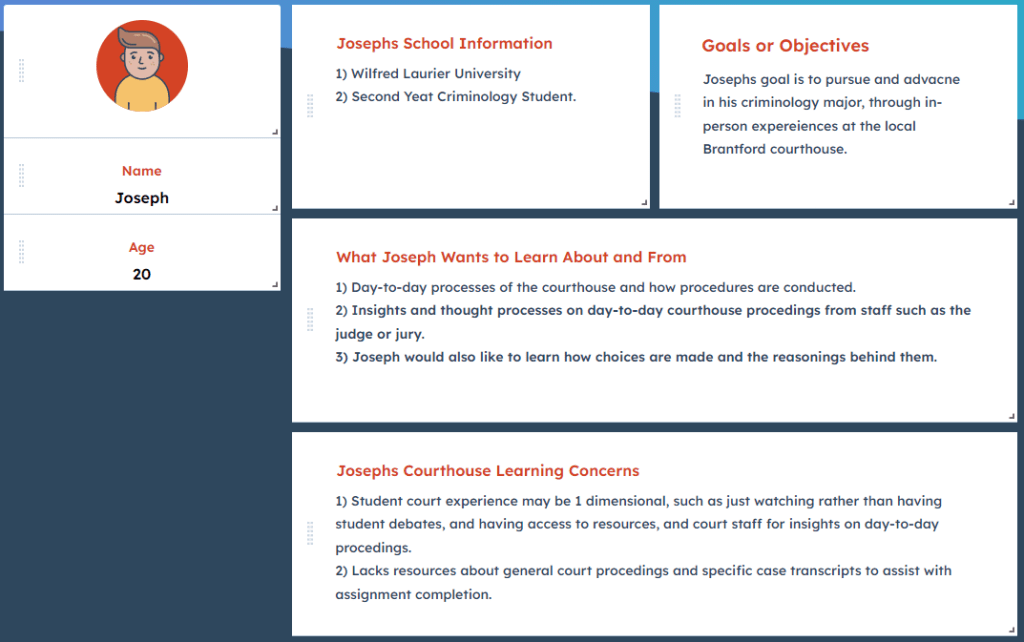
Our team was tasked with designing a Living Lab classroom for Wilfrid Laurier University students. The goal was to create a space where students could observe court sessions, participate in mock trials, and engage in independent or group work.
The design needed to provide independent and collaborative learning spaces, ensure accessibility for all students, and support flexible access to court documents (both physical and digital).
My Contributions
I focused on research, design development, and accessibility:
- Research Support: Assisted in creating surveys and focus group questions to gather insights from students.
- Design Development: Contributed to wireframes, prototypes, and design solutions that prioritized individual workspaces and accessibility.
- Accessibility Features: Helped implement feedback such as providing physical and digital access to court documents.
Research Methods
Surveys
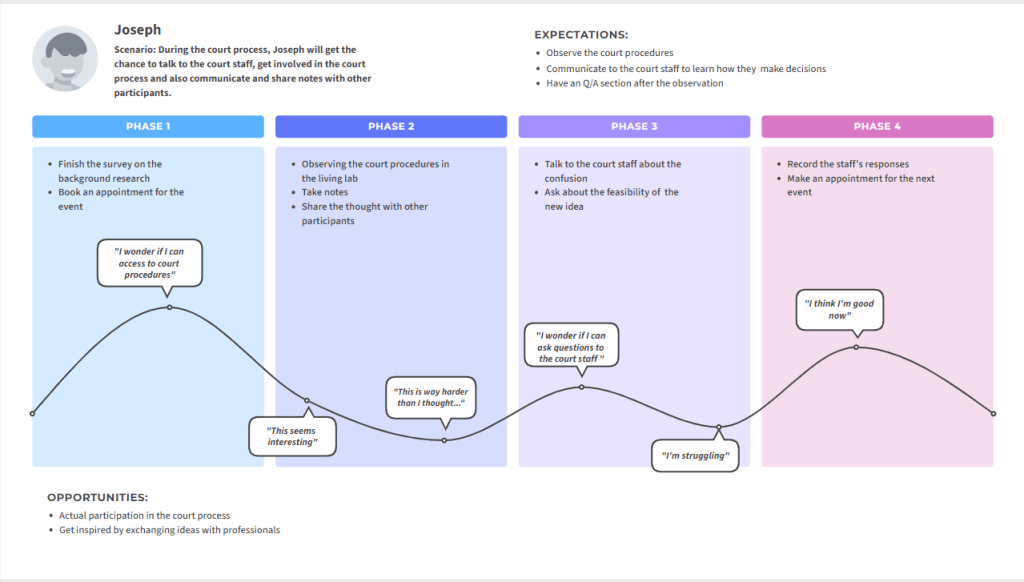
- Purpose: Understand student expectations, pain points, and preferences for the Living Lab.
- Execution: Scenario-based, closed-ended, and open-ended questions to test feature prioritization and gather suggestions.
Focus Groups
- Purpose: Engage students in Criminology and Mock Trial programs to gather targeted feedback.
- Execution: Students interacted with low-fidelity prototypes, placing sticky notes on areas for improvement. Key questions included:
- Where would you access case details if you want to avoid specific content?
- Where would you go for help understanding live text in the lab?
- Which features are unnecessary or missing?
Participant Breakdown: 20 students total
- 5 in focus groups
- 15 across three surveys
Key Findings
- Individual Workspaces: Students wanted quiet, independent work areas; these were added to the final design.
- Court Document Access: Requested both physical and online access for flexibility.
- Information Desk: Students suggested a central Help Centre for schedules, bookings, and resources.
Design Iterations
Low-Fidelity Prototype
- Focused on core layout and basic functionality.
Medium-Fidelity Prototype
- Added individual workspaces for quiet productivity.
- Introduced a Help Centre/Information Desk.
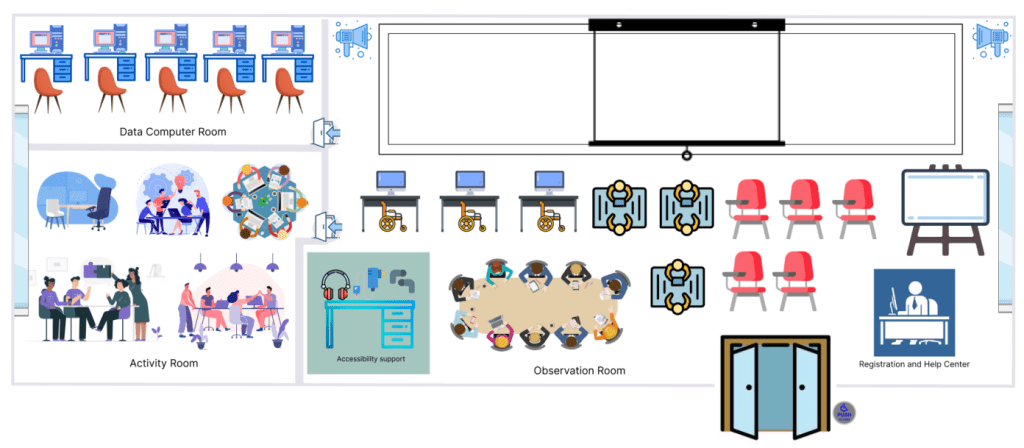
Final Prototype
- Ergonomic seating and group table spaces
- One-way mirror for observing court sessions
- Help Centre/Information Desk for mock trial bookings and document access
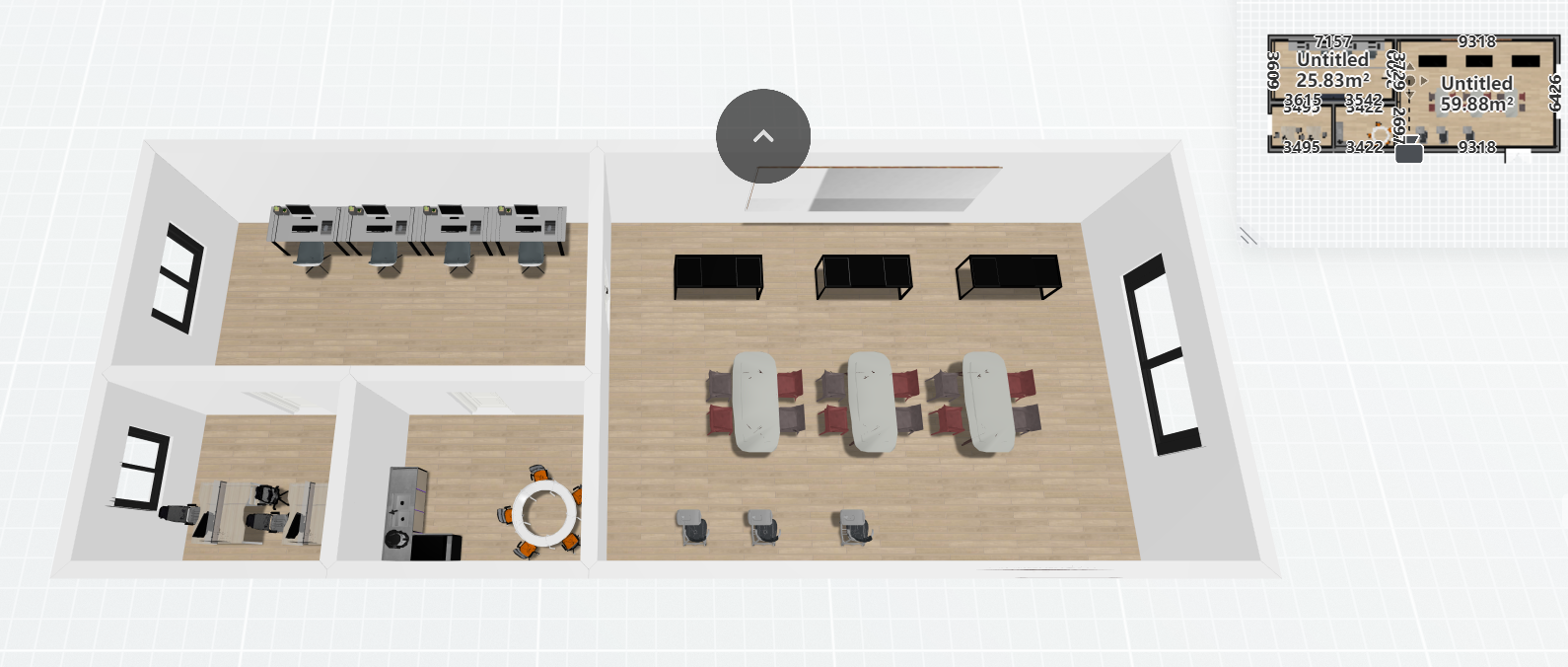
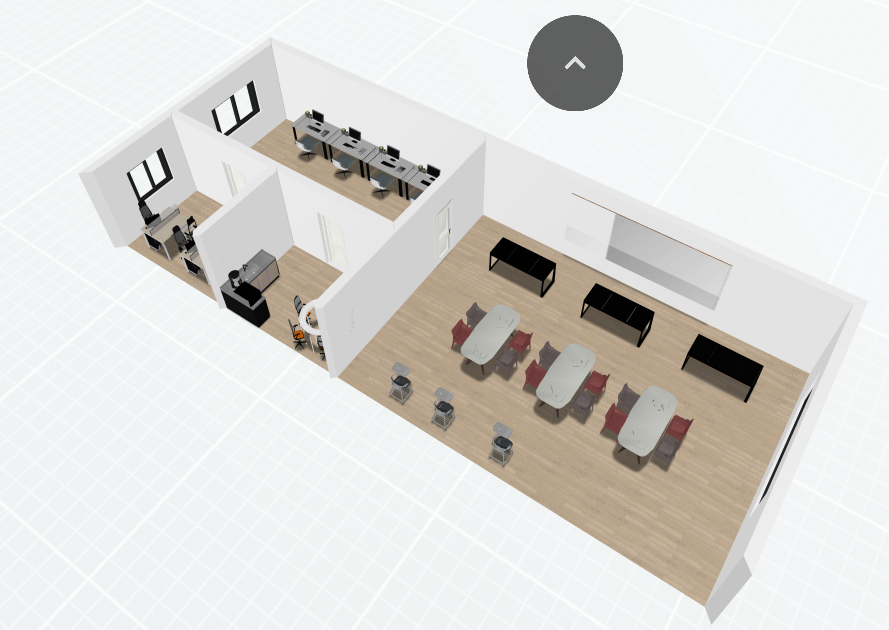
Final 3D model visualizing classroom layout, accessibility features, and collaborative spaces.
Challenges & Limitations
- Small sample size (20 participants) limited generalizability.
- Self-selection bias may have skewed results.
- Low-fidelity prototypes couldn’t capture all user needs in detail.
- Limited stakeholder communication occasionally slowed decision-making.
Future Direction
- Scheduled quiet work times and personal/handheld whiteboards.
- Enable remote participation for students unable to attend in person.
- Make court documents fully accessible online for independent research.
What I Learned
- Strengthened skills in designing for accessibility and inclusion.
- Improved ability to synthesize research into actionable design decisions.
- Gained experience balancing iterative design with group collaboration and stakeholder needs.
 Megan McMullen
Leave a comment