• Timeline: Sept 2024–Mar 2025
    Team: WaterlUX (8 designers)
    My Roles: Project Manager, Client Liaison, User Research Facilitator, Prototyper

    The Challenge

    Residents in the Region of Waterloo relied on dozens of online forms that were inconsistent, difficult to navigate, and not fully accessible. Forms were often abandoned due to poor mobile optimization, confusing layouts, and redundant inputs.

    How might we create a standardized, accessible, and intuitive online form experience for residents, one that respects diverse user needs, reduces friction, and aligns with the Region’s upcoming digital services portal?

    My Role

    I wore multiple hats throughout this project:

    • Leadership: Co-managed the project scope and deliverables, created the Gantt chart, and tracked deadlines.
    • Client Collaboration: Acted as the main point of contact, coordinating meetings, gathering feedback, and aligning our work with stakeholder expectations.
    • Research: Designed and facilitated surveys, interviews, and a modified card-sorting activity. Created consent forms and synthesized insights into key pain points.
    • Design: Co-created low-, mid-, and high-fidelity prototypes in Figma, focusing on accessibility, clarity, and user flow.

    Process

    We followed a blended Design Thinking / Double Diamond approach, iterating through research, definition, ideation, prototyping, and testing.

    Research & Empathy

    • Conducted surveys and interviews with residents.
    • Learned that users struggled with redundancy, unclear instructions, and lack of mobile optimization.

    Define

    • Key problem: forms weren’t standardized, causing frustration and drop-offs.
    • Design goals: improve findability, accessibility, and mobile usability.

    Ideate

    • Built personas and journey maps.
    • Sketched storyboards and drafted wireframes focused on reducing cognitive load.

    Prototype & Test

    • Created low → mid → high-fidelity prototypes in Figma.
    • Ran usability tests with think-aloud protocols, walkthroughs, and A/B comparisons to the existing forms.
    • Iterations led to simplified layouts, progress indicators, and clearer input structures.

    Prototype Evolution

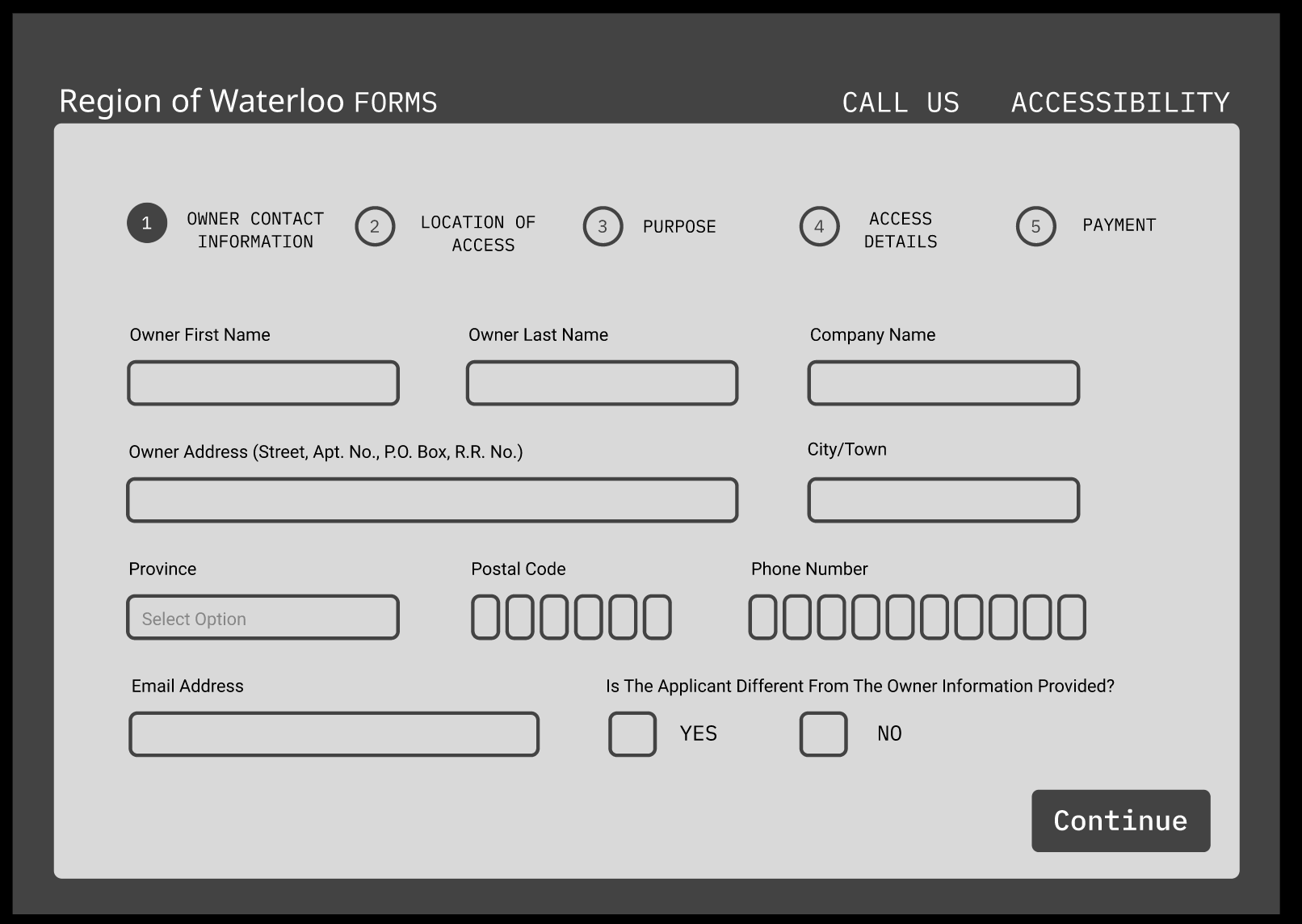
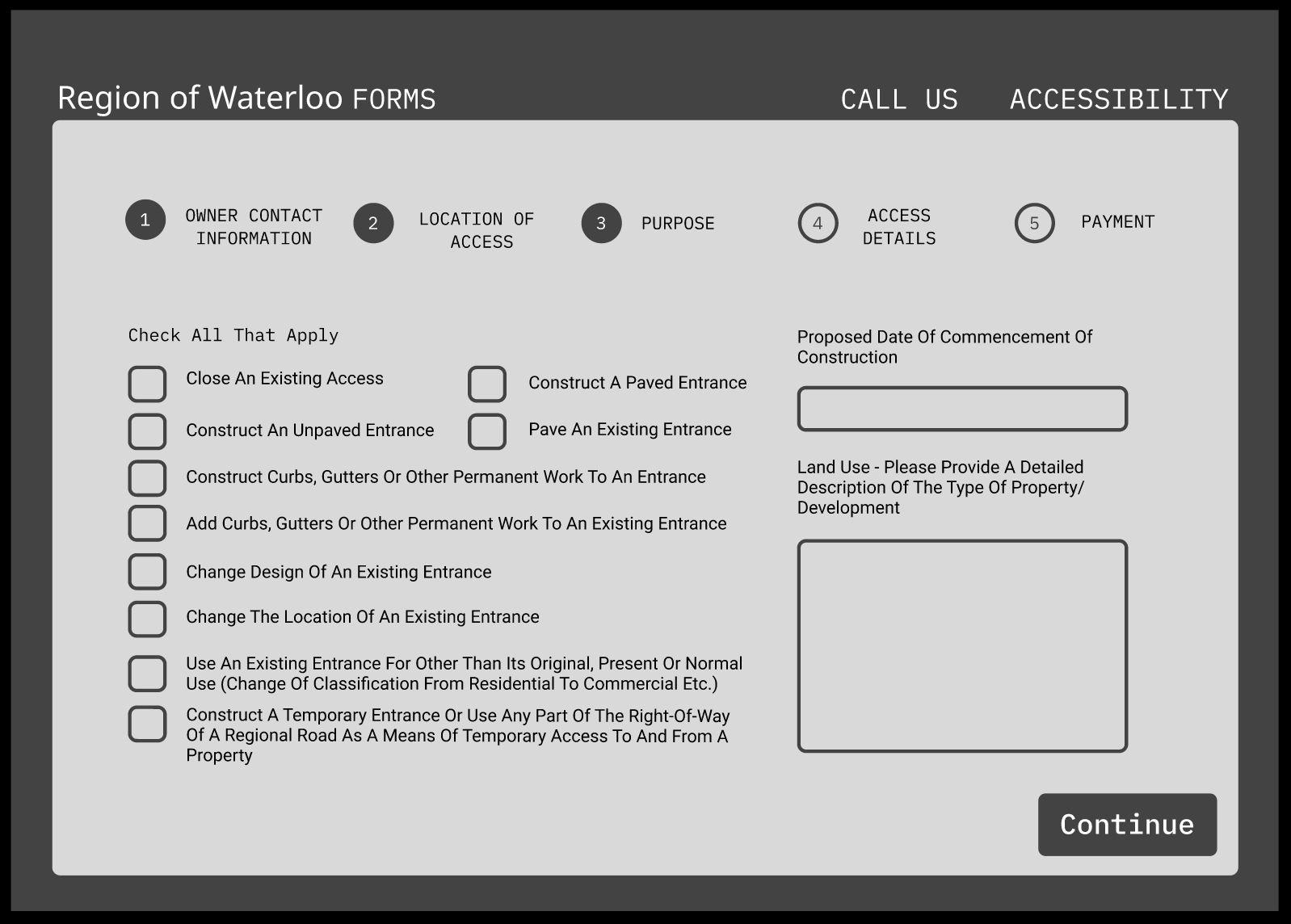
    Mid-Fidelity

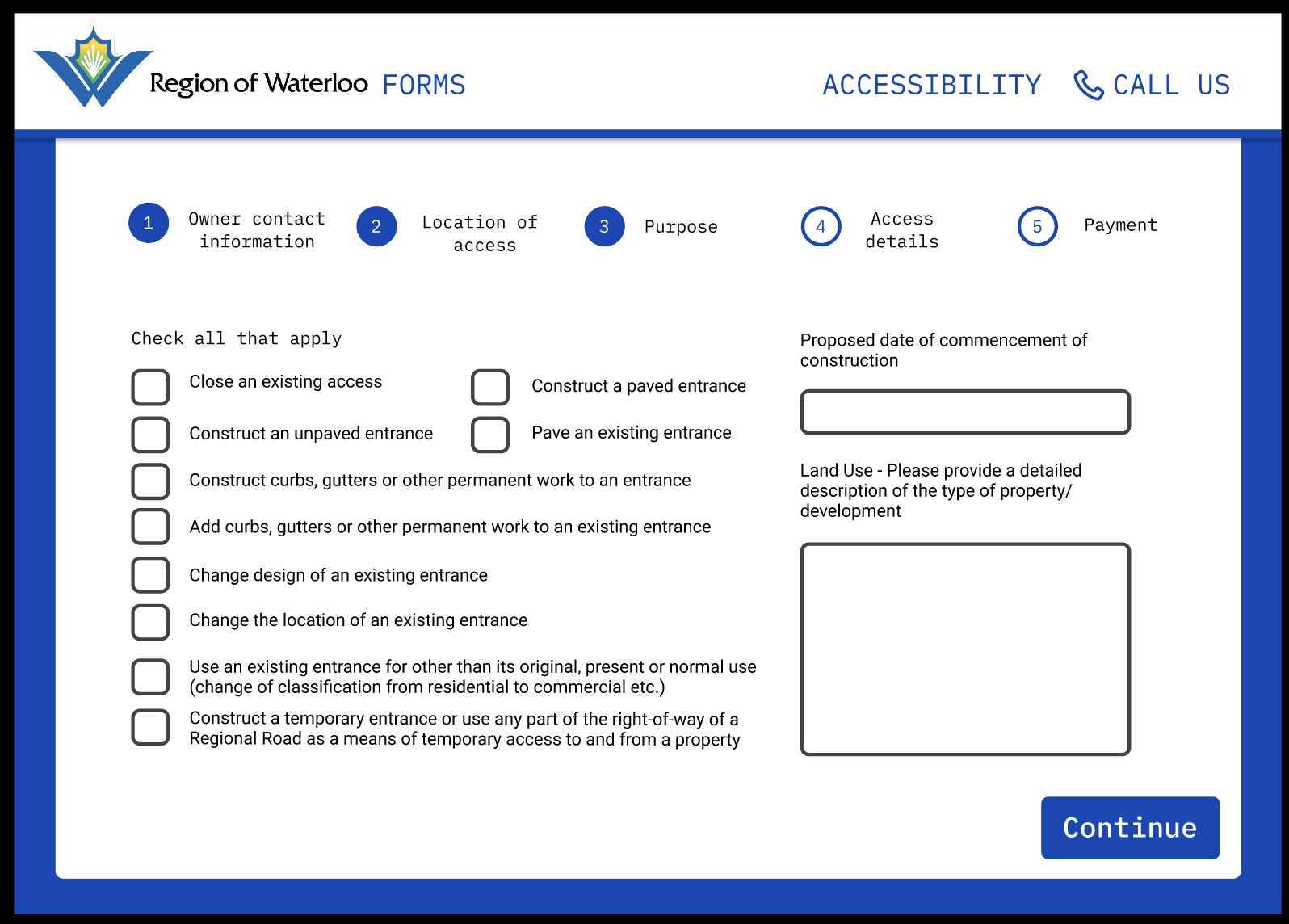
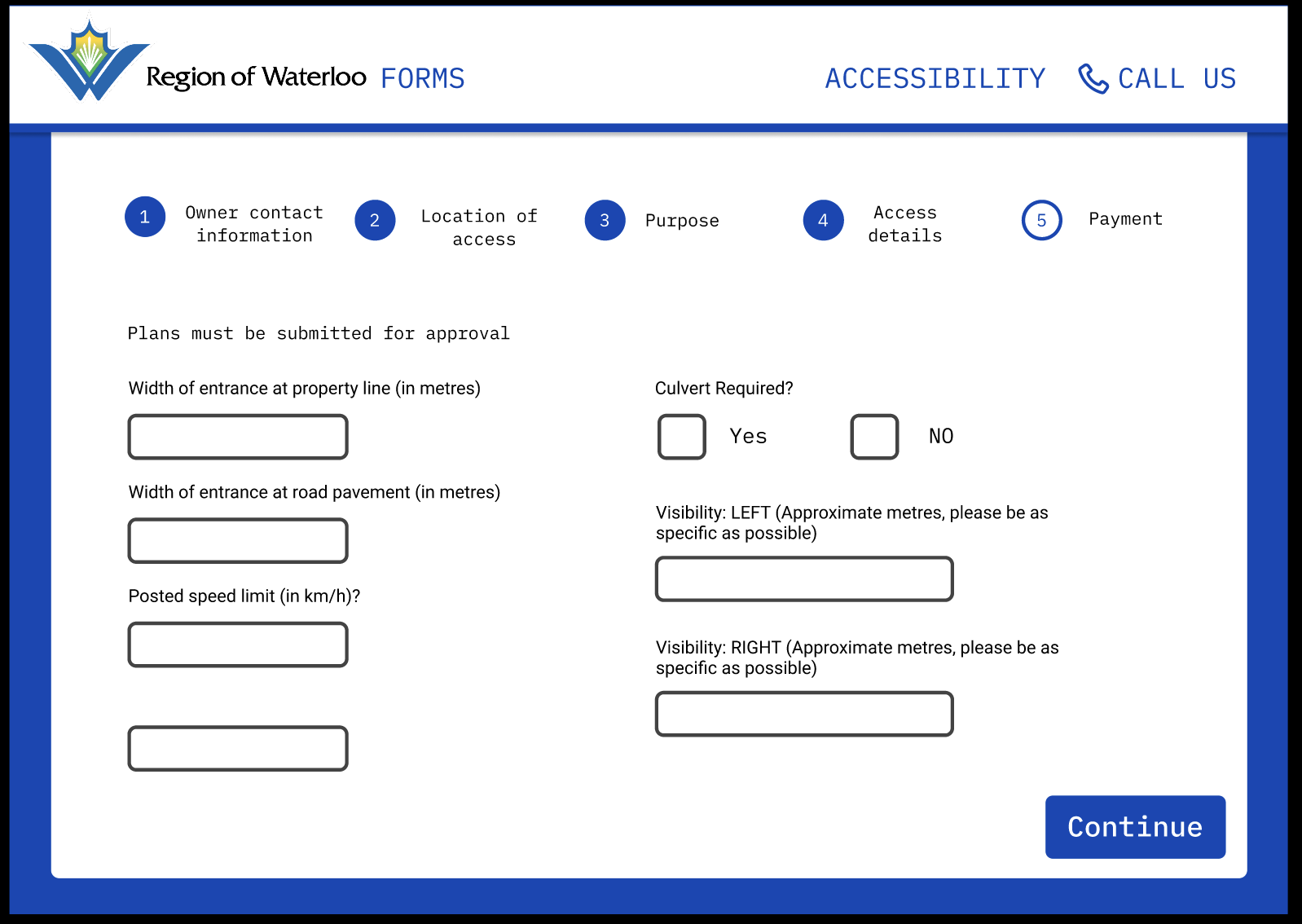
    • Structured flow guiding users step by step.
    • Focused on layout and reducing redundant fields.
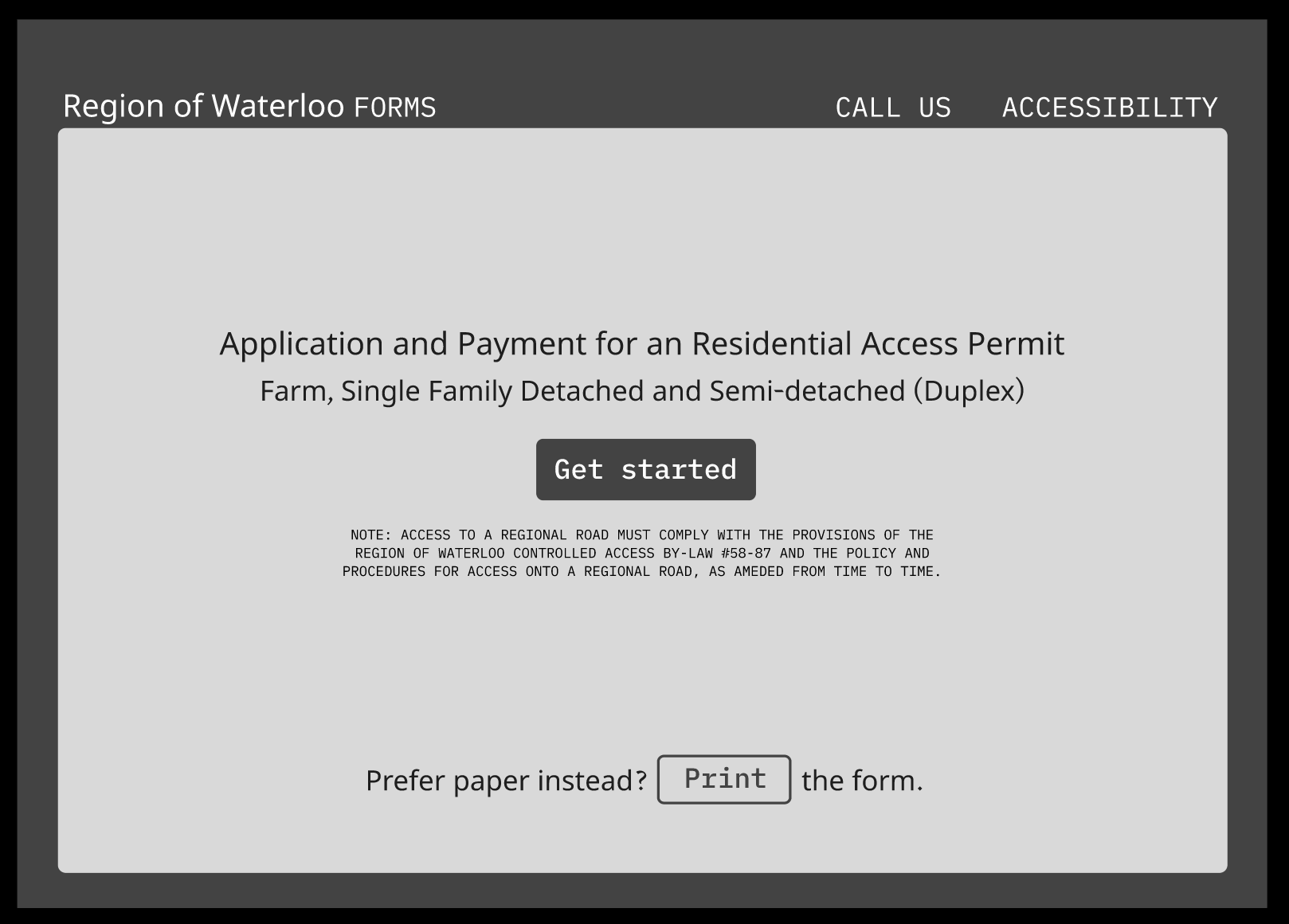
    Mid-Fidelity prototype simplified the flow and reduced redundant fields, making it easier for users to progress without confusion.

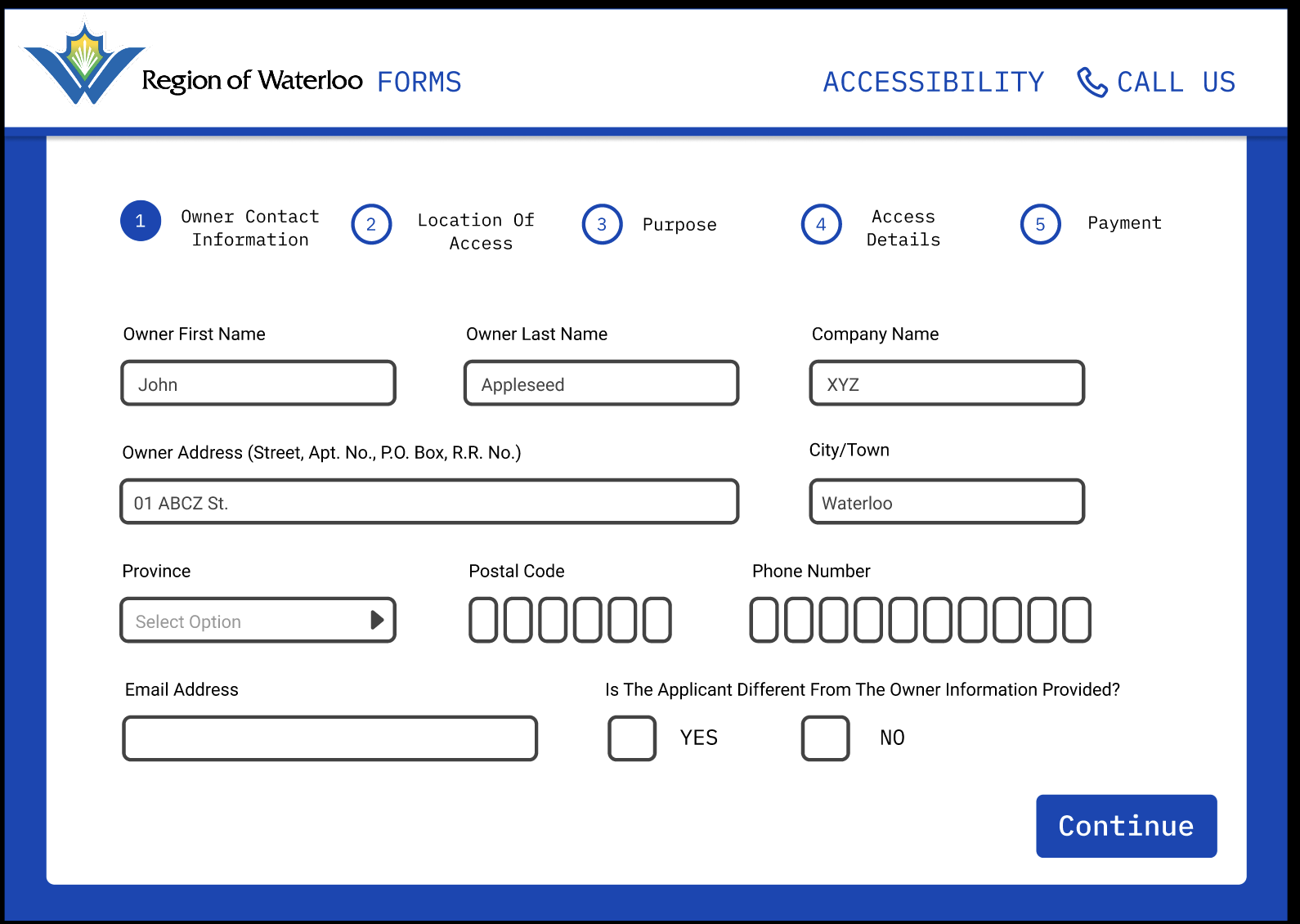
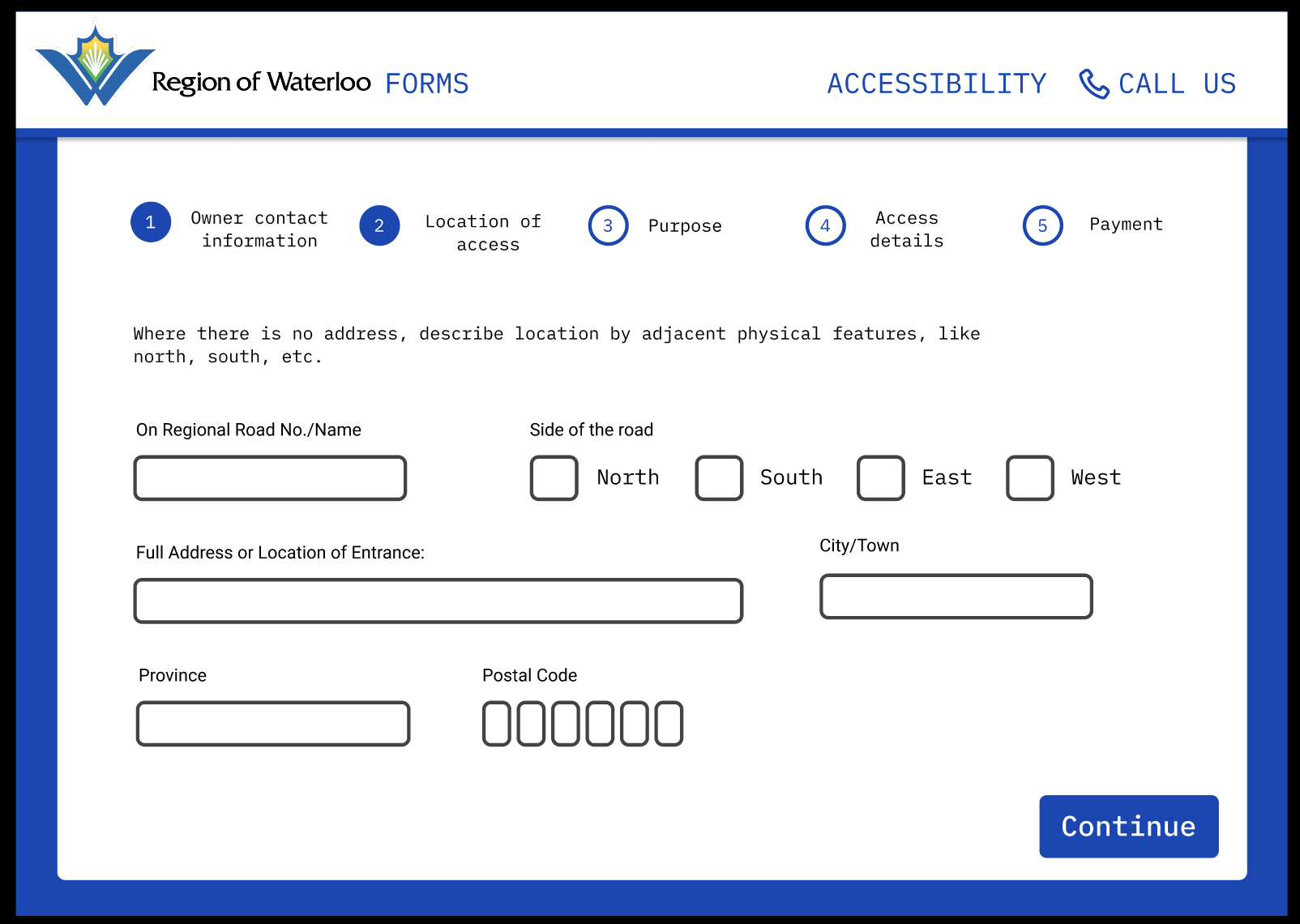
    High-Fidelity

    • Finalized branding and responsive design.
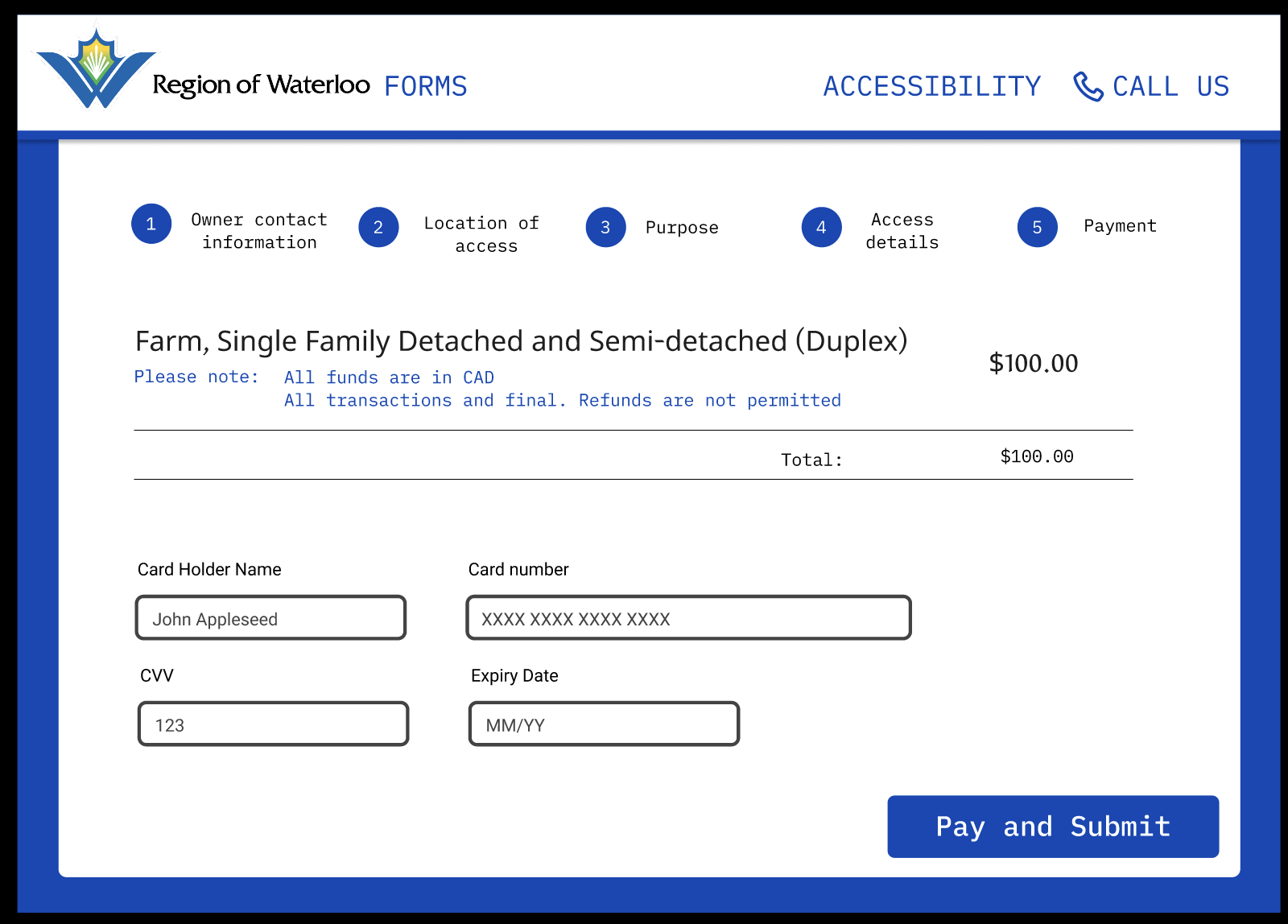
    • Accessible input fields, improved error states, and confirmation steps.
    • Mobile-first adjustments: larger tap targets, reduced scrolling, and simplified navigation.
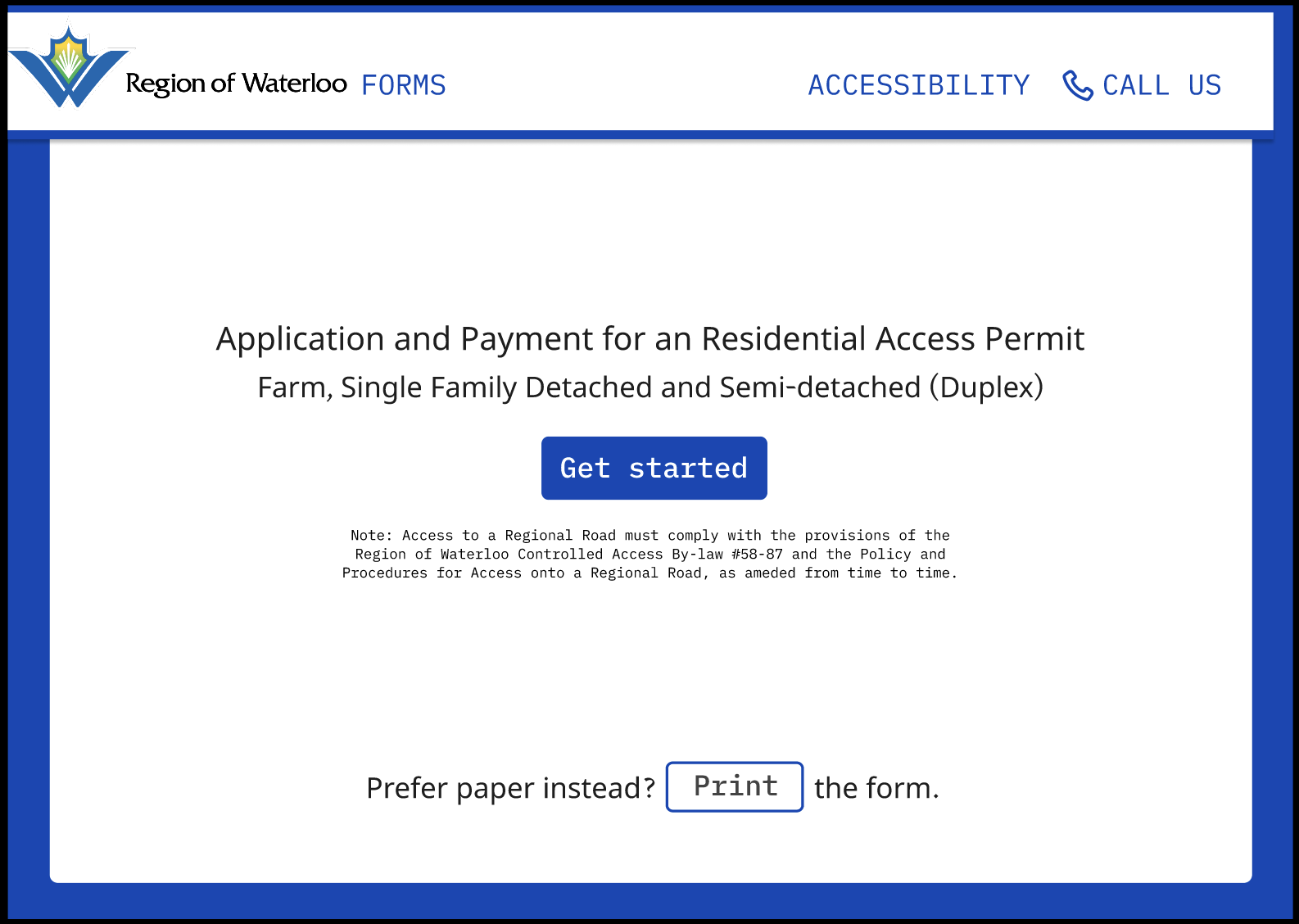
    High-fidelity prototype with accessibility features and a new confirmation flow that reduced user drop-offs.

    Final Outcomes

    We delivered a responsive, scalable form template for the Region of Waterloo:

    • Accessibility: WCAG 2.2 compliance with strong color contrast, font resizing, simplified language, and assistive tech compatibility.
    • Consistency: Standardized structure for forms across departments.
    • Usability: Progress indicators, auto-fill/address lookup, and confirmation messaging.
    • Mobile Optimization: Tap-friendly inputs and reduced scrolling for smaller screens.
    • Scalability: A design system that can extend to multiple form types.

    Stakeholders at the Region expressed interest in incorporating our designs into their upcoming digital services portal.

    Challenges

    • Recruitment: Limited participant pool meant we had to lean on personal networks to test.
    • Balancing Priorities: Negotiating between user needs and stakeholder requests required frequent communication and compromise.

    What I Learned

    This project sharpened both my design and leadership skills:

    • Accessibility isn’t an add-on, it’s a design foundation.
    • Real client work means balancing feasibility, timelines, and user needs.
    • Communicating insights clearly to stakeholders is just as important as designing screens.

    Presenting to Region staff during a final showcase reinforced the value of process-driven design and gave me confidence in stakeholder-facing communication.
    Explore the Prototypes

    Desktop Prototype in Figma →

    Mobile Prototype in Figma →

  • Timeline: Jan-Mar 2024
    Client: Rookery Books (independent bookstore)
    Role: Sole Designer

    The Challenge

    Rookery Books, a local independent bookstore, needed a reusable email template to share book recommendations, promote events, and engage their community.

    The template had to allow the team to update content independently, reflect the store’s cozy, literary brand identity, and remain accessible and easy to navigate.

    My Contributions

    As the sole designer, I managed the project end-to-end:

    • Client Collaboration: Met with the bookstore team to define goals and content needs.
    • Wireframing: Sketched low-fidelity layouts to explore options, then refined them into high-fidelity wireframes aligned with the brand.
    • Design Execution: Built an interactive, reusable email template in Canva with editable sections for books and events.
    • Usability Focus: Structured the template for clarity, accessibility, and ease of ongoing updates.

    Process

    Sketching & Layout

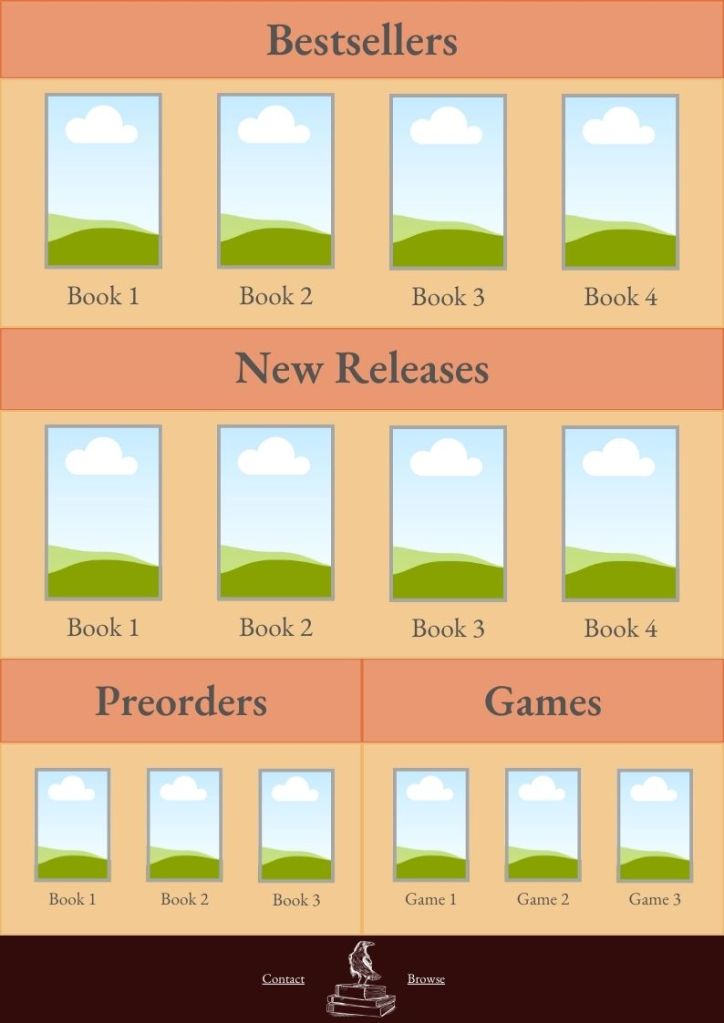
    Initial low-fidelity sketches established the main sections:

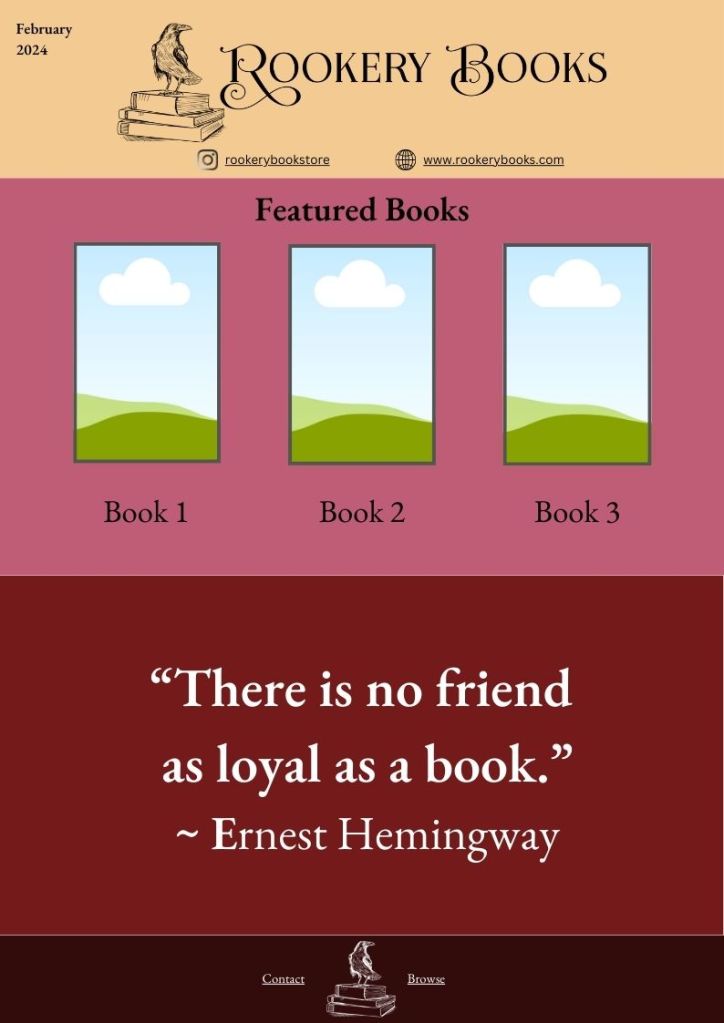
    • Welcoming header with branding and announcements
    • Featured book spotlight
    • Event promotions with calls-to-action
    • Footer with social links and subscription options

    Wireframing

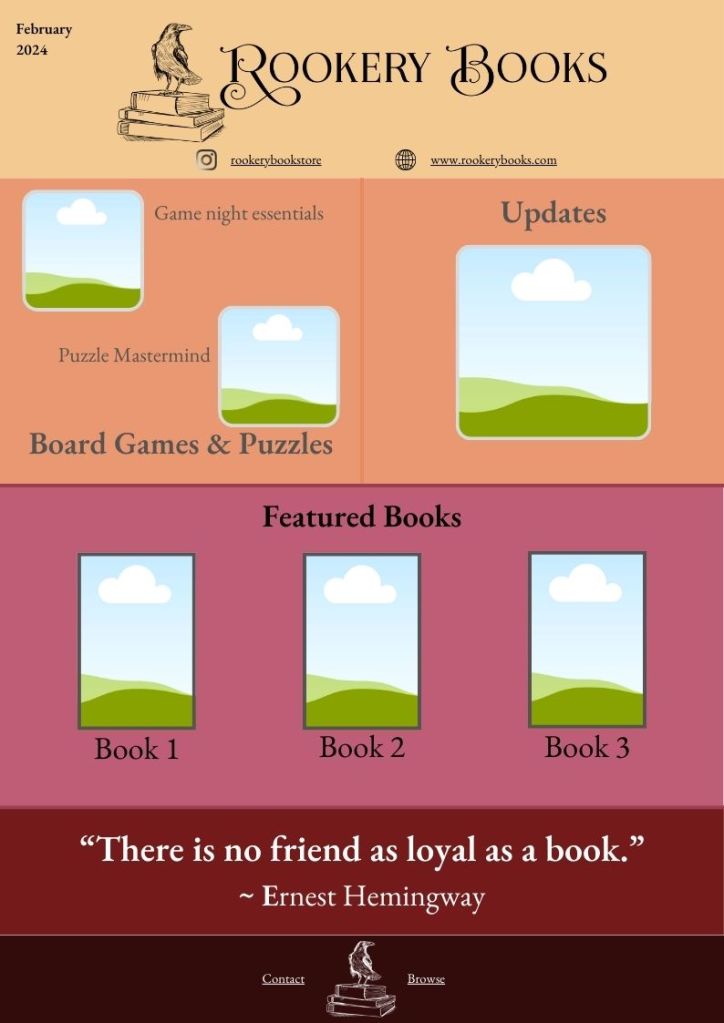
    High-fidelity wireframes refined typography, spacing, and colors to match Rookery Books’ identity. These prototypes were reviewed with the client for alignment.

    Final Design

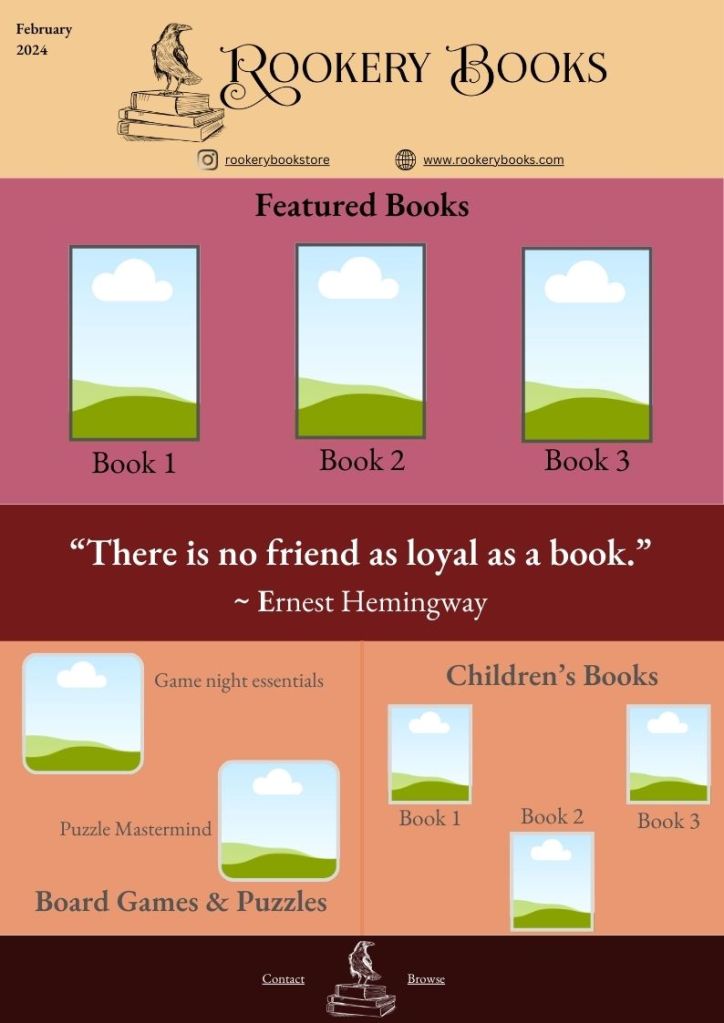
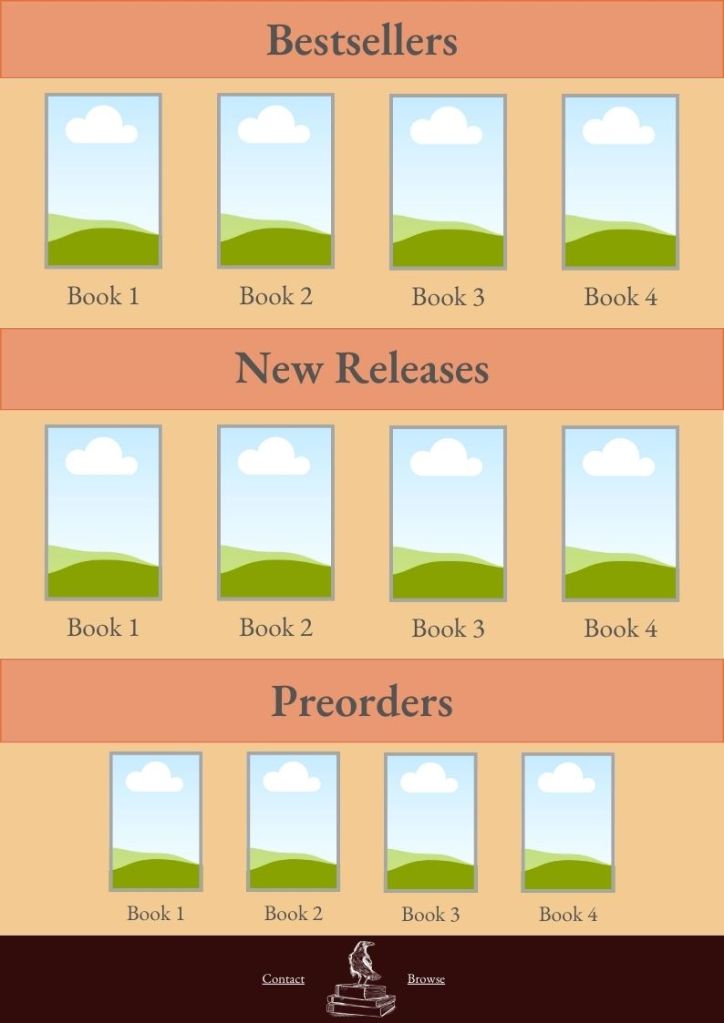
    I built the interactive template in Canva, enabling the bookstore team to easily update book covers, titles, and event details without redesigning the layout.

    Final Template Features

    • Header: Logo and tagline for consistent branding
    • Featured Book Section: Prominent space for book cover, title, and description
    • Event Promotions: Flexible modules for signings, readings, or book clubs
    • Footer: Social media links and newsletter subscription call-to-action

    Final template designed to reflect Rookery Books’ cozy literary brand while ensuring easy updates by staff.

    Results & Feedback

    The reusable design allowed them to independently promote new books and events, reducing their reliance on outside help.

    Rookery Books praised the template for its professional, brand-aligned look and ease of use.

    What I Learned

    This project strengthened my skills in designing scalable, client-friendly templates. I gained experience balancing aesthetics with functionality, and I saw firsthand how accessible, reusable design empowers clients to maintain consistency without technical barriers.

  • Timeline: Feb-Mar 2024
    Role: Designer

    The Challenge

    Tidy Tails is a pet grooming app designed to help pet owners schedule grooming appointments easily. Our group project goal was to create a welcoming, intuitive interface that encourages users to explore features and book appointments effortlessly.

    The app needed to enable intuitive appointment booking, reflect a friendly and playful brand personality, and remain accessible across devices.

    My Contributions

    As a key contributor, I focused on design systems, UI, and branding:

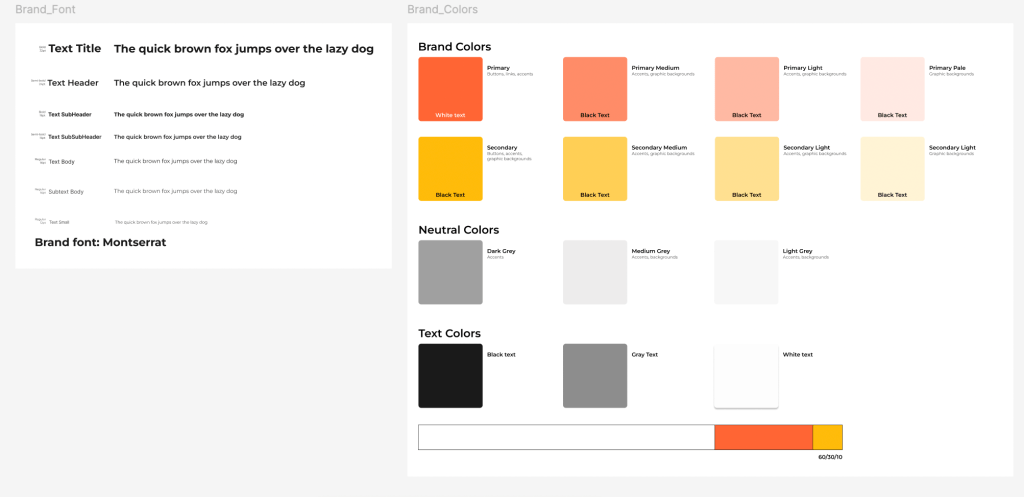
    • Design System Creation: Developed a comprehensive Figma design system including typography, color palette, and reusable UI components to ensure consistency across the app.
    Figma design system with reusable components, typography, and vibrant colour palette to maintain consistency across the app.
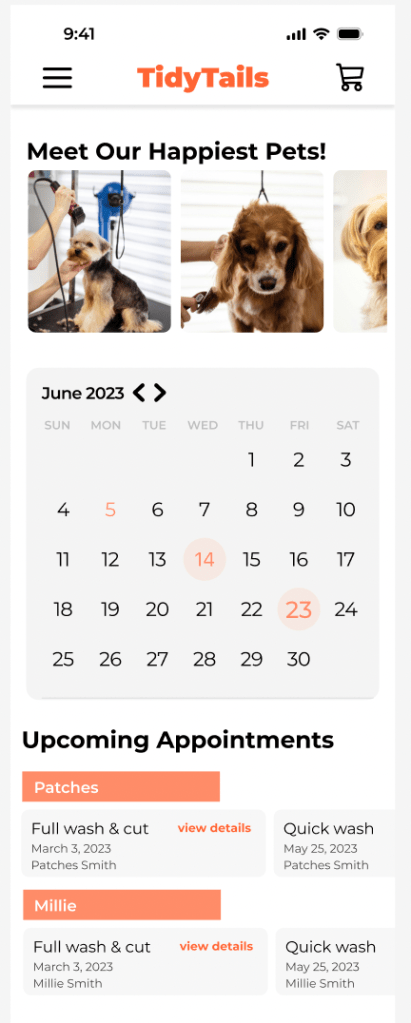
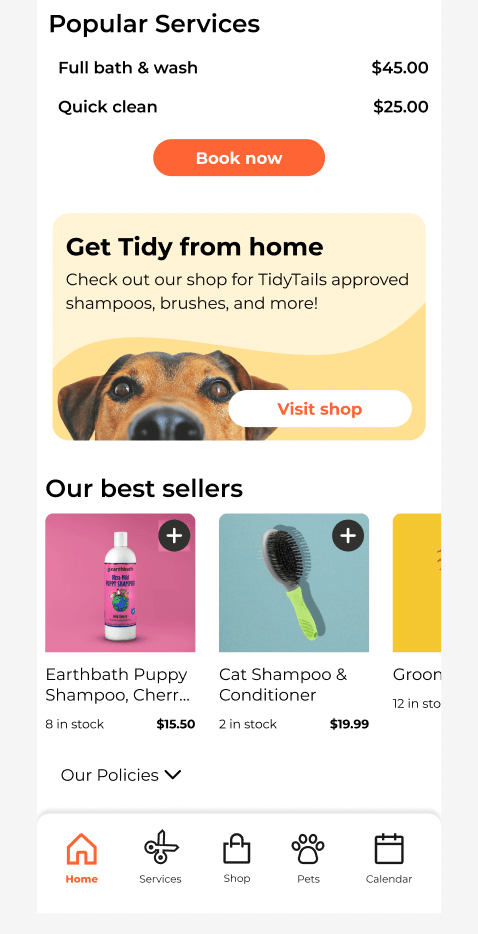
    • Home Screen Design: Designed the app’s home screen to highlight essential services, products, and CTAs, prioritizing intuitive navigation.

    Home screen showcases key services and promotions, guiding users through the booking process with clear CTAs.

    • Brand Colors: Collaborated with the team to define a pet-friendly, vibrant color palette conveying trust and happiness.
    • Logo & App Icon Concepts: Created logo and alternate app icon concepts to explore the brand’s playful identity.

    Final logo concept exploring playful, pet-centric elements. While not used in the final app, it informed the minimalist branding direction.

    Alternate app icon reflecting a fun, approachable visual identity for Tidy Tails.

    Design Process

    Competitive Analysis:

    • Reviewed existing pet grooming apps to identify gaps in features, visual design, and user experience.
    • Determined opportunities to differentiate Tidy Tails with engaging visuals and dynamic interactions.

    Wireframing & Layout:

    • Started with responsive layouts prioritizing intuitive navigation.
    • Low-fidelity sketches guided the placement of key sections: header, featured services, events, and footer.

    Visual & Interactive Design:

    • Applied the vibrant color palette, pet-centric imagery, and interactive elements (hover effects, transitions) to create a welcoming, dynamic user experience.
    • Ensured all components aligned with the Figma design system for consistency and collaboration.

    Challenges & Limitations

    • Limited time prevented extensive user testing.
    • The logo concept I designed was not ultimately used, but it informed the team’s branding direction.

    Accomplishments & Outcomes

    • Delivered a visually appealing, user-friendly home screen as part of the prototype.
    • Established a robust Figma design system that streamlined collaboration and ensured consistency across all screens.
    • Contributed to a cohesive brand identity through team collaboration on color and visual design decisions.

    Future Direction

    • Conduct usability testing to refine navigation and accessibility features.
    • Collaborate with pet grooming professionals and owners to ensure the app meets real-world needs.

    What I Learned

    • Strengthened Figma and design system skills.
    • Learned how to balance branding, usability, and team collaboration.
    • Gained experience designing intuitive, playful interfaces that prioritize user experience.